

Blog
Encouragement and insights for the journey ahead.
By Emily Miller
M.A. (Marriage & Family Therapy), LAC
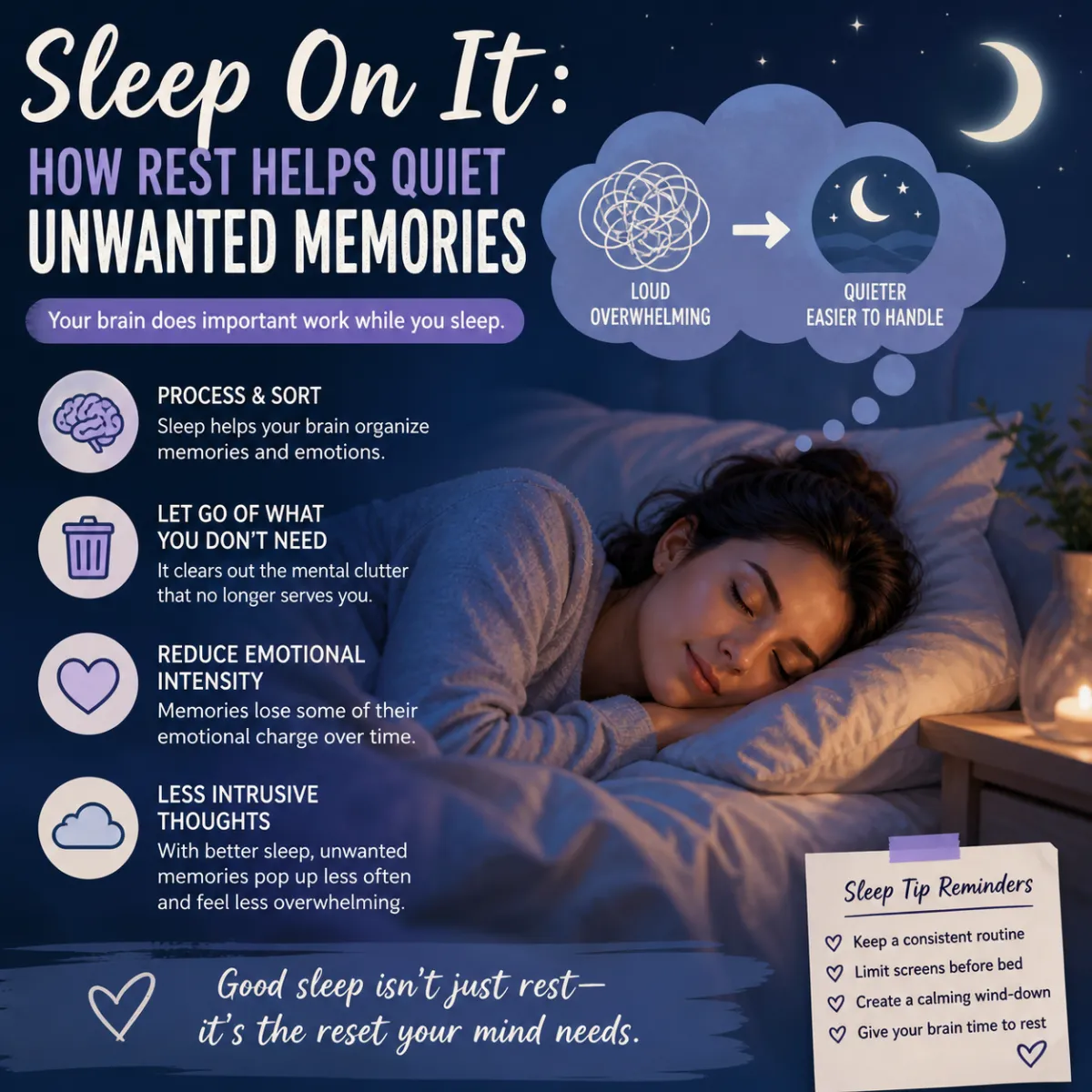
How Rest Helps Quiet Unwanted Memories
Sleep On It: How Rest Helps Quiet Unwanted Memories
We’ve all had those moments…when your brain suddenly replays something you really didn’t ask for. An awkward conversation, a stressful event, or something more intense just shows up out of nowhere, like your mind hit “shuffle” at the worst possible time.
It can feel random, frustrating, and sometimes even a little unsettling.
But here’s something important (and honestly kind of reassuring): sleep plays a huge role in how often those unwanted memories pop up, and how intense they feel when they do.
Why Unwanted Memories Show Up
Your brain isn’t trying to annoy you. It’s trying to process.
When something emotional, stressful, or unresolved happens, your brain holds onto it a little tighter. It’s like a “needs attention” tab that didn’t get closed properly.
So instead of disappearing, it can resurface as:
Sudden intrusive thoughts
Mental replays of past moments
Emotional flashbacks or lingering feelings
Overthinking loops
This is especially true if your brain hasn’t had enough time— or the right conditions —to sort through it.
What Sleep Actually Does for Your Brain
Sleep isn’t just “turning off.” It’s when your brain does some of its most important behind-the-scenes work.
During sleep, your brain:
Sorts and organizes memories
Decides what’s important to keep and what can fade
Processes emotional experiences
Reduces the intensity attached to certain memories
Think of it like your brain running a nightly “file cleanup” system.
Without enough sleep, those files stay messy, and are more likely to pop back up when you least expect them.
REM Sleep: The Emotional Reset Button
One of the most important stages for this process is REM (Rapid Eye Movement) sleep.
This is where:
Emotional memories get processed and “softened”
Connections are made between experiences
Intense feelings begin to lose their edge
It’s not that the memory disappears, it just becomes easier to think about without the same emotional punch.
When REM sleep gets disrupted (by stress, inconsistent sleep, or not enough total rest), those emotional memories don’t get fully processed. So they’re more likely to resurface during the day.
What Happens When You Don’t Get Enough Sleep
When sleep is short or inconsistent, your brain doesn’t get the chance to finish processing what it started.
That can lead to:
More frequent intrusive or unwanted thoughts
Stronger emotional reactions to memories
Increased anxiety or rumination
Difficulty “letting things go” mentally
It’s not about willpower. It’s about your brain not getting the reset it needs.
Supporting Your Brain Through Better Sleep
You don’t need perfect sleep to see benefits. Even small improvements can help your mind feel calmer and more manageable.
A few gentle ways to support this process:
Keep a consistent sleep window (even if it’s not “ideal”)
Wind down before bed — less stimulation, more calm
Limit late-night scrolling (your brain stays “on”)
Create a simple routine your brain can recognize as “time to rest”
Be patient with the process — your brain catches up over time
You’re Not “Stuck” With Those Thoughts
Unwanted memories can feel like they come out of nowhere. But they’re often a sign your brain is trying to finish something it didn’t get to complete.
Sleep gives your mind the space to process, organize, and soften those experiences.
So if your thoughts have been louder lately, it might not be something you need to fight harder…
It might be something your brain just needs more time— and rest —to work through.
Final Thoughts
Sleep isn’t just rest, it’s repair, processing, and emotional regulation all happening at once.
And when you give your brain enough of it, you may notice something subtle but powerful:
Those unwanted memories don’t disappear overnight…
But they do get quieter.

Start Your Journey Today
Begin your journey towards a happier and more fulfilling life today.

At Exhale, we believe everyone has power to create the life they desire.
This is a supervised private practice. It is owned and managed by a master’s-level, non-independent licensee under Board-approved clinical supervision pursuant to A.A.C. R4-6-211. The Board approved clinical supervisor of this practice is:
Name: Rachel Sommerfield, LPC, MC, ADHD-CP
Phone: (520)509-5371
Email: [email protected]

© 2025 . All rights reserved.
Facebook
Instagram
TikTok