

Blog
Encouragement and insights for the journey ahead.
By Emily Miller
M.A. (Marriage & Family Therapy), LAC
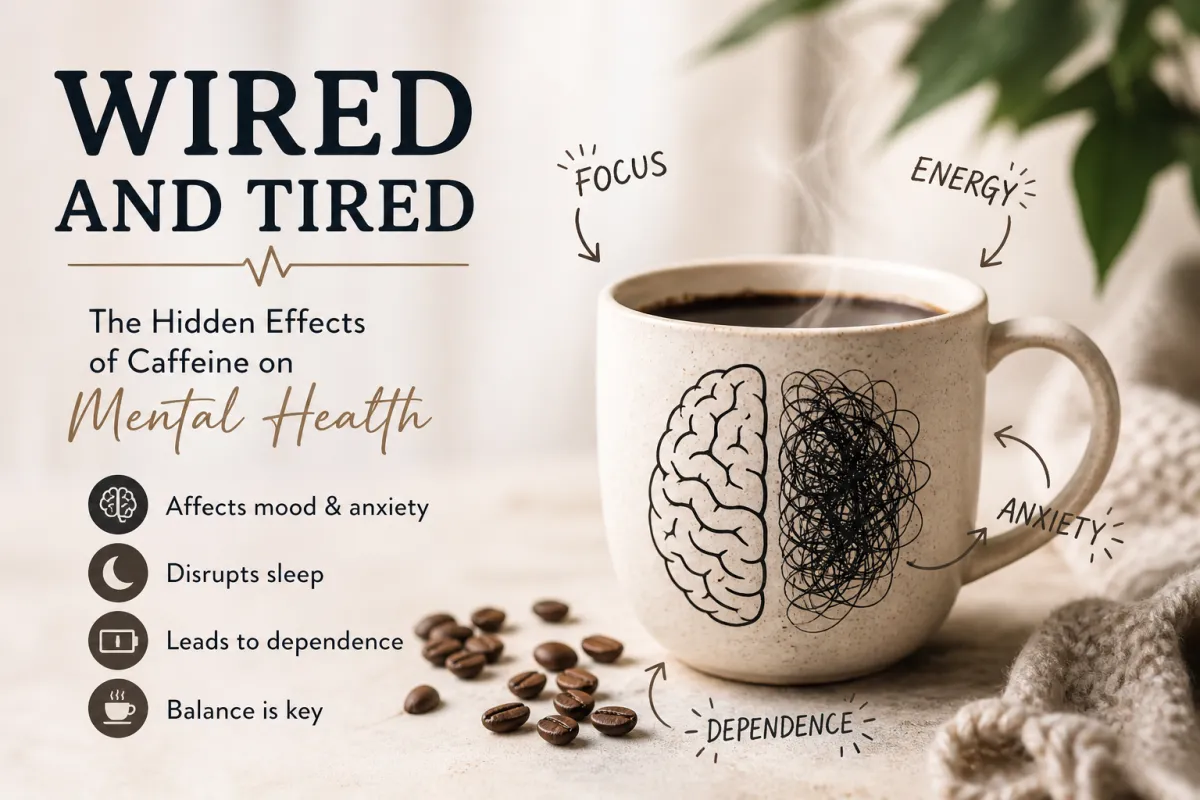
Wired and Tired
Wired and Tired: The Hidden Effects of Caffeine on Mental Health
Caffeine is everywhere: A morning coffee, afternoon energy drinks, even in teas and chocolate. For many, it’s a daily ritual and a quick boost to get through busy days. But while caffeine is widely accepted and even encouraged, it’s also one of the most commonly used— and often underestimated —addictive substances.
Understanding how caffeine affects your mind and body can help you make more intentional choices about your energy, focus, and overall well-being.
What Caffeine Does to Your Brain and Body
Caffeine works by stimulating your central nervous system. It blocks adenosine, a chemical that makes you feel tired, which is why you feel more awake after consuming it.
In the short term, caffeine can:
Increase alertness and focus
Boost energy and reaction time
Improve mood (temporarily)
But that boost comes at a cost. Especially when consumption becomes frequent or excessive.
The Addictive Nature of Caffeine
Because caffeine directly impacts brain chemistry, your body can quickly become dependent on it. Over time, you may notice:
Tolerance: needing more caffeine to feel the same effect
Withdrawal symptoms: headaches, fatigue, irritability when you don’t have it
Cravings: feeling like you “need” it just to function
While caffeine addiction may not look as extreme as other substances, its subtle, daily presence can make it harder to recognize.
The Mental Health Impact
Caffeine doesn’t just affect your energy, it can also influence your emotional state. For some people, especially those sensitive to stimulants, it can:
Increase anxiety or restlessness
Disrupt sleep patterns (even hours after consumption)
Contribute to irritability or mood swings
Create a cycle of “wired but tired”. Boosting energy short-term while worsening long-term fatigue
When sleep is impacted, mental health often follows, leading to a cycle that can be hard to break.
Finding Balance with Caffeine
You don’t necessarily have to cut caffeine out completely, but being mindful of your intake can make a big difference.
Pay attention to timing
Avoid caffeine later in the day to protect your sleep.Notice your body’s response
Does it make you focused, or anxious and jittery?Reduce gradually if needed
Cutting back slowly can help avoid withdrawal symptoms.Explore alternatives
Herbal teas, water, movement, or short breaks can provide natural energy boosts.
You Deserve Sustainable Energy
Relying on caffeine to push through exhaustion can mask what your body actually needs— rest, nourishment, and balance. Learning to listen to your body instead of overriding it is a powerful step toward long-term well-being.
Final Thoughts
Caffeine may be socially accepted, but that doesn’t mean it’s harmless for everyone. Like many things, it’s about awareness and moderation.
By understanding how caffeine affects your body and mind, you can make choices that support your energy, your sleep, and your mental health. Not just in the moment, but over time.

Start Your Journey Today
Begin your journey towards a happier and more fulfilling life today.

At Exhale, we believe everyone has power to create the life they desire.
This is a supervised private practice. It is owned and managed by a master’s-level, non-independent licensee under Board-approved clinical supervision pursuant to A.A.C. R4-6-211. The Board approved clinical supervisor of this practice is:
Name: Rachel Sommerfield, LPC, MC, ADHD-CP
Phone: (520)509-5371
Email: [email protected]

© 2025 . All rights reserved.
Facebook
Instagram
TikTok